Posted on 7 Comments

Kits and Supplies Now Available

brakitsandsupplies_header

Exciting news!

The Measure Twice Cut Once webstore is now carrying bra kits and accessories in a wonderful array of fashionable colours!

celeste bra kit

pink bra kit

purple bra kit

I’ve been receiving so many emails asking about where to find good hardware, people trying to find suppliers of plush back elastic and the general struggle to find anything suitable. So I thought I’d make it easy for everyone and make them available on the website.

I’m offering both kits and accessories as I know you might just need to source one or 2 pieces and already have the rest in the stash? This way is much more flexible and you can tailor it to your needs.

The sliders and O rings are metal with a beautiful finish and available in either gold or nickel (silver).

gold bra sliders

nickel bra rings

Bra strapping are available in different widths and colours. Great for bra straps, headbands, cami top straps and anywhere you need a firm elastic with a controlled amount of stretch.

Picot or plush back elastic is available in 3m lengths perfect for knickers, boxer shorts, bras and even waistbands of skirts and slips.

I hope this makes your bra and knicker making a whole lot easier and don’t be afraid to ask if there is something you need and can’t find. It’s a pretty good chance I can source it for you.

Kits and accessories can be posted worldwide and are sent out using Australia Post.

Posted on 7 Comments

Bra Making – how to DIY your own pattern part 5

diy_bra_header-5

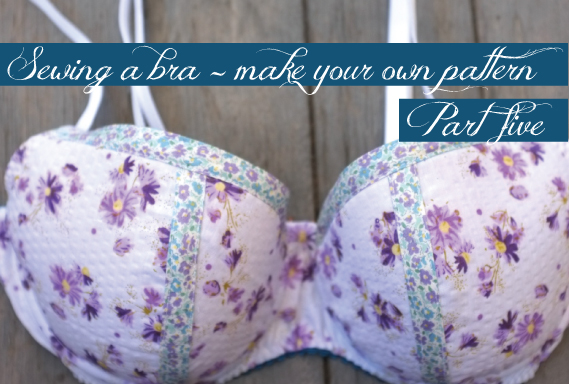
A finished bra, a properly finished bra.

bra 1

For this version I’ve gone with a plain woven cotton fabric for the cups, cradle and bridge. Seams are covered with some pretty bias tape and white mesh used for the back. I used some teal coloured underwear elastic from the stash for the edges. Underwires, foam lining and bra strapping were purchased but the O ring, sliders and back fastener were all salvaged from a worn out bra.

bra unfolded

A few people have asked how the plain cotton wears, I find it great to wear and I like the fact I can use up scraps. It’s also a nice stable fabric to sew which can be handy when you are going through a process it’s easier to put some known variables into the mix. So instead of having to deal with a super slinky slippery fabric on top of sorting out tension and fit, it’s easier to use a cotton and perfect the techniques before moving onto harder to deal with fabrics.

After the disaster sewing of the last one I played around with the zig zag stitch on my machine until I perfected the settings. I’ve now got the instructions on how to recreate those settings written in my process notes so I can replicate perfect stitching every time.

I’ve made a few minor alterations notes but want to do some wash and wear tests before I make another one to ensure I’ve got my pattern perfect before I make ALL the bras. For ease of sewing I already know I want to increase one of the seam allowances as it’s so small and fiddly now. Will increase it and trim it to make the sewing easier.

Like all sewing, bra making is not difficult to do but takes time to perfect and I’ve thoroughly enjoyed the process of making my own pattern and creating bras from it.

Seems like more than a few of you have been interested in DIYing your own bra pattern as I’ve had many requests to teach classes on the process. So I’m in the midst of working out the logistics am happy to announce that…

DIY bra classes will be coming soon to Sydney!

Be sure to sign up to the newsletter or follow on instagram to ensure you get first notice about it.


Posted on 5 Comments

Bra making – how to DIY your own pattern part 4

diy_bra_header-4

I’ve had my pattern and supplies ready to go for weeks and have been so busy it’s had to just sit there taunting me to hurry up and make it. So today I set aside some time to sew up my bra.
Before I got started I

  • made sure I had all my pattern pieces
  • got out all my supplies
  • looked at the photos I took before unpicking my bra
  • looked at another bra that is virtually identical to the one I unpicked
  • placed a notebook and a pen by my machine

Then I started cutting and assembling the bra. Along the way I made sure to note when seams didn’t quite match up. Seam allowance sizes and could I make adjustments. I took copious amounts of notes on how I sewed it together and what I needed to change.

All this note taking and referencing is really important if you want to make multiple bras and it helps when it comes to fitting. If you’ve adjusted a seam allowance and then it’s tight you can figure out where the issue occurred.

Overall I felt I was going really well. Then my machine which is normally an absolute angel decided it was not going to sew any mesh fabric without skipping all over the place. Cue 4 hours of me cleaning and testing the machine over and over to try and get a decent result. Nope it looks like a dogs breakfast. It’s quite possibly the worst stitching I have ever done (and now there are photos of it on the internet).

half done bra

A half done bra, only the right side (when wearing) of the bra has an underwire in it, no straps, no closures but plenty of dodgy stitching. Want a close up of the stitching? Sure why not?

bad stitching

So very very bad. It’s skipping, puckering and just horrible.

underwire v non wire

On this style the shape of the cup looks very very odd until the underwire casing and then the underwire is inserted. It then magically pops up to the correct shape. It really shows just how much of the shape of a bra is down to every individual component working together.

inside cup with underwire

The inside of the cup with the underwire. Next time I’m going to cover the inside of the foam. It’s nice and soft as is I just think the extra finishing detail might be nice?

inside cup without underwire

Here you can see the odd shape the cup is before the casing and underwire is put into place. It’s also pretty cool in that the casing actually hides all those raw edges. Over in the side of the photo you can see where I need to adjust the pattern as it was too wide on the back mesh. Looking back on my notes I had added a double lot of seam allowance by accident. It really is so handy to take notes when you are attempting a DIY of this sort.

trim

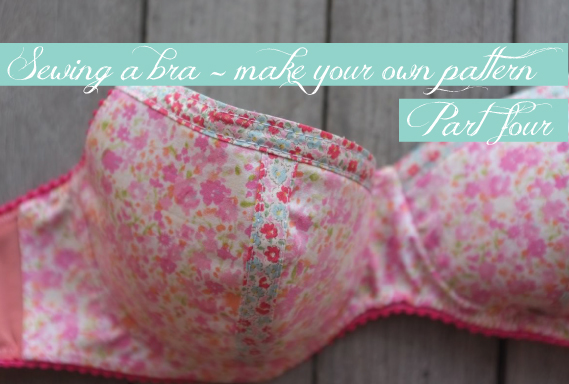
On the outside I used a floral bias binding to cover a dart on the cup and across the tops of each cup. On the original bra instead of bias it was lace. I did try a lace but felt that it got lost on the floral so tried the bias and I really like the look of it. Would love to try it with a high contrast like navy blue satin bias on a cream satin base.

For this stage it’s going well. The only thing holding me back is not wanting to utterly break my machine when it’s clearly having problems. The one big fit problem with bras is that you have to finish one to try it on and see if it fits. Obviously this isn’t at that stage yet but I already have a list of things to improve the construction and look of future bras

  • cover internal of cups
  • use of alternative trims like Bias works
  • back mesh panels need to be adjusted to correct height
  • foam cup panels are slightly too large for fabric pattern size. Re check measurements and adjust
  • add more notches to help line things up more accuraetly
  • regular woven cotton works well as a foam cup covering with no wrinkles or tension

For me this sample looks pretty but has bad stitching. It is just a toile and I’m going to have to make some dodgy ones in order to get the pattern perfect and I’m not defeated yet.

So if you are working away on your own DIY bra pattern, keep at it. Take your notes and keep trying.

Posted on 4 Comments

Bra Making – how to DIY your pattern part 3

diy_bra_header-3

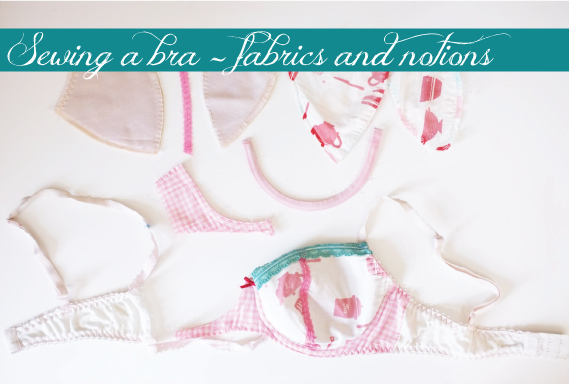
By now you have taken your bra apart and spent your time making an accurate pattern. So now it’s all about collecting everything you need to start sewing your bra.

Based on the bra I took apart here is what I need

bra-components

  1. Foam – I chose one that is about 4mm thick, the same as the bra I took apart
  2. Decorative lace trim
  3. Exterior fabric
  4. Underwire casing
  5. Underwires
  6. Contrast fabric – this could also be the same as the exterior fabric
  7. Bra strap elastic
  8. Rings – I find metal ones last longer and if you are putting your bras into the washing machine/dryer then I’ve found metal ones last much longer
  9. Bra sliders – again I prefer metal but then can also be plastic
  10. Powermesh –  on this bra it’s powermesh but I have other bras that have a soft mesh, polyester spandex. If you can’t get exactly like the bra you took apart then be aware of the amount of stretch (or lack thereof) that you are adding to your bra.
  11. Decorative bow
  12. Decorative ribbon
  13. At the bridge on this bra there is an exterior fabric and then the inner fabric is a non stretch fabric
  14. Hook and Eyes
  15. Mesh cover on internal cup seams. This one has a line of mesh but other styles I have use an incredibly soft satin ribbon. I’m thinking of going with the ribbon just because I already have some and it’s one less item to buy.
  16. Lingerie elastic

In addition you will need thread, machine needles, a machine that can do straight stitch and zig zag and a large cup of tea or coffee to help you out during the assembly.

Now I know this looks like a huge amount of stuff but if your original bra is in pretty good condition there is a whole bunch of stuff you can recycle from the original bra. The underwires, even the underwire casing if you were careful during the unpicking stage. Hook and eyes can be reused (and dyed if necessary), sliders and rings can be re used multiple times (another good reason to go metal and not plastic). Even the decorative bow can be re used.

This covers what I need to recreate my bra, be sure to check your own bra and see what is needed to recreate it. There is a great list on Bra makers Supply that is super helpful and I find the information that Norma from Orange Lingerie to not only be amazing but also inspiring.

The next step is going to be the assembly of my bra and I hope to get to that as soon as I can. Apologies for the big gap in time from Part 2 to Part 3 but life stuff happened and I just didn’t have time to get to this post, sorry if it interfered with anyone’s plans.

Am excited to be up to the assembly stage, it’s going to be fun recreating one of my favourite bras.


Posted on 8 Comments

Bra making – how to DIY your pattern part 2

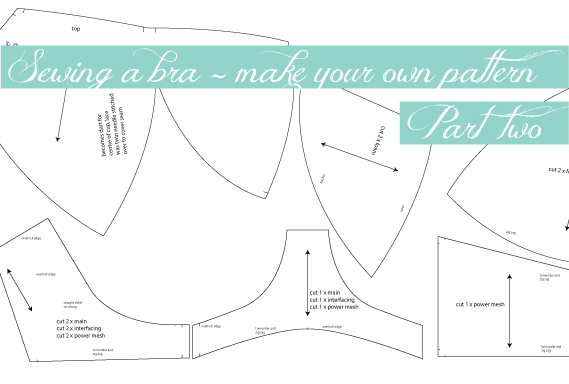
diy_bra_header2After scanning my pressed pieces, I am going to set about tracing them using Adobe Illustrator. Now as I said in part 1 you don’t need to make a digital pattern. I’m doing it because it’s going to make visuals easier for me to show on the blog and because I have a cat who likes to nest in lots of pretty patterns. Invariably I lose pattern pieces. This way I am ensuring that none get lost and I don’t have to unpick another bra and start the whole process over again.

Start by tracing any pieces that are asymmetrical in shape. If you are using Illustrator the pen tool is your best option for this. Double check to make sure your scans are at actual size. Do not resize them from the original size or you will run into sizing problems when you make your actual bra.

tracing your bra pattern

If you are creating a traditional manual pattern use pattern weights to hold the pieces in place while you trace around. If your pieces are too small for that, try taping them in place using some magic tape or washi tape (basically any tape that is easy to remove. Now is not the time to be using super sticky tape that may damage your pattern). Use a sharp pencil, ruler and french curve to help you get the most accurate tracing possible. Be sure to mark seam allowances, grainlines, stretch direction and if needed add notes. The shapes are odd and very small so it can be easy to mix them up. A well placed this side up, this seam joins to that seam marking or note can make your life a whole lot easier. This pattern is for YOU so make all the notes and markings you need to.

Screen Shot 2014-10-09 at 2.34.28 pm

Once you have all the asymmetrical pieces traced now it’s time to work on the symmetrical pieces. Mark the centre point of each of the pattern pieces. Take a sheet of paper and fold it in half. Placing the fold line under the original fabric piece. Lining it up on the centre line you just marked. Once it is correctly aligned then you can trace out one side of your shape. Creating them on the fold is more accurate. Do this for all symmetrical shapes. If using illustrator, trace half and then copy the piece and flip it. Re join it to create one pattern piece.

Screen Shot 2014-10-09 at 2.40.56 pm

As you go through tracing your pieces be critical in the assessment of them. Is there an odd bump going upwards on what seems to be a straight line? Does one corner pull down in an almost arrow like way? Pattern lines should be smooth. If it’s a curve, a straight line or an angle. The line is to be smooth and free from bumps or ridges. When you are tracing from a garment that has been worn you will find more bumps and ridges as the fabric has distorted. You can see in the above photo that the fabric piece has been distorted. See how warped the gingham checks are. I’ve drawn the piece to help compensate for those factors. So take your time now to be aware of this and adjust if needed?

It all comes down to the accuracy of your pattern. Take your time, trace carefully but also measure. Ensure that pieces that are to be joined are the same length, mark your notches, grainlines. Use your notes and photos to give yourself as much information as you need to get a really good pattern created.

Screen Shot 2014-10-09 at 5.13.58 pm

Next time I’ll be talking fabrics, trims and notions. Until then if you need anything clarified or just have more questions, ask away in the comments.


Posted on 13 Comments

Bra making – how to DIY your own pattern part 1

diy_bra_header

It seems that bra making is capturing everyone’s interest so I thought I would do a few more technical posts on how I create my own patterns for bras. This way you can see how to create a pattern from a favorite bra you already own. Today is part 1 and I’ll be following up with more posts covering the steps. I do hope that this is useful for you, I know it was the information I was looking for when I wanted to make bras and I couldn’t find it so did it my own way instead.

First up grab a bra you like the fit of but is looking a little worse for wear. In my last bra post I referred to these as zombie bras, as in not quite dead. You want one that still retains the majority of shape and stretch as the more warped it is the more fit tests you are going to have to do to refine the pattern. You could of course use a brand new bra but sometimes we can’t always afford to do that. If you can though, go for it. Using a brand new one means it hasn’t had time to warp or stretch so you should end up with less faffing about to get your fit perfect.

Photograph it.

full_bra

Include detail shots, like how the band/cups are constructed. Interior shots are good too.

band_detail

What the back looks like.

bra_back

Then unpick it

unpicked-bra_blog

As you unpick, it’s a good idea to keep notes on the construction methods used. Like was it straight stitch or zig zag, was there a bar tack at the very top or a few millimeters away from the very edge. Was the elastic sandwiched in between the underwire casing and the outer fabric. I tend to take photos as well as notes to help jog my memory.

Once you have it fully unpicked then grab your iron and get pressing. You want all the wrinkles out and your pieces as flat as possible. Be careful though. What you are looking for here is to press the pieces to their original shape. In the photo above you can see the back of the bra is a floppity looking. It’s quite stretched and in all honesty not perfect for this project. So I press it flat with some of the wrinkles in it. I don’t want to press it out to the newly warped shape. Press but be mindful of not distorting the original shape.

Now that I have all the pieces and they are more or less the correct shape I’m going to scan them. That way I can create a digital pattern for myself. If you don’t want a digital pattern you can create a traditional paper pattern also.

bra-scans-not-at-actual-sizeI’m going to leave it there for now so you can get unpicking. The next post will be covering how to make the pattern and then we will continue on from there.  If you need anything clarified or just have more questions, ask away in the comments.

Posted on 23 Comments

Sewing adventures: making a bra

bra_header
I love Lingerie, from a simple cotton set to silk and intricate lace I love it all. So naturally once I conquered making my own knickers I wasn’t going to sit around with a drawer full of non matching sets (the horror! ha ha).

For a few months I’ve been gathering supplies. Foam for the cups, elastics, channeling for underwires and other bits and pieces. They’ve been sitting in a tub mocking me. Why mocking? because I kept putting it off. Too often we read/hear/get told that sewing is hard and certain things like lingerie are held up with this mystique of being difficult. For some silly reason I got spooked and didn’t want to start. Obviously I got over that and just got on with it.

The actual sewing of a bra is not that hard or difficult. If you can use a zig zag and a straight stitch you can do it. What is hard is getting the fit right. Due to my love of lingerie I own um…quite a lot of it. So I’ve been putting aside the ones that are starting to show signs of wear but haven’t completely disintegrated yet. These not quite dead bras (zombie bra’s if you will) have been photographed and then unpicked.

By photographing them I know what they are meant to look like when I reassemble but it also gives me a stitch template to follow. When to use straight stitch, when to use a zig zag. This is super helpful as you end up with lots of very small pieces and putting them together is a bit like a jigsaw so a visual guide is a saving grace.

Once unpicked I’ve been creating a pattern from them and this bra is the first toile I’ve made up from one of my zombie bras. I managed to re use the underwires, the hook and eyes and the straps from the original as well. That was a nice added bonus after all the unpicking.

sewing bras1

My lovely model as you can see, doesn’t quite fill out the cups. I do and the fit isn’t too bad for this style of rather simple bra. With only a few very minor tweaks it will be identical in fit to the original purchased bra before it started to wear.

The back needs a bit of an adjustment as it’s come out quite rounded from the strap placement down to the hook and eye. It’s not bad or wrong so much as it can be improved and so it will be.

sewing bras2sewing bras3

Where the front cup meets the strap it could do with a bar tack for extra strength.

sewing bras4

The original bra had molded cups, these aren’t always available and I can find the shape a little bit bullet bra for my liking. So I’ve purchased bra foam. It comes by the metre and is far far cheaper than buying individual molded cups. To take this into account I cut the original molded cup into 3 pieces, cut them flat from the foam and then zig zag seam them back together again. You can faintly see it through the mesh here. It worked really well sewing wise and I can’t wait to see how it wears as I feel like it could be a really good solution for when you can’t get cups or don’t like the shape they create.

sewing bras5

If you are looking to make your own underwire bras this is a great way to start for a few reasons
– you know the original bra fits. I should mention if you are going to unpick one try not to do it to one that is totally wrecked. It’s very hard to take a pattern off pieces that have stretched and warped. To the point where a wrecked bra would actually make it more difficult. While a new bra is a bit expensive to rip apart it is a good start point, or do what I do and go for one that is gently worn and be sure to allow for this when making your template pattern from it.
– the unpicking process gives you the reverse order of assembly so take notes and photographs to help with the sewing steps
– you can salvage hardware
– it’s a cheap way to see if you like making bras

Posted on Leave a comment

Everyone Deserves Pretty Knickers – Design

What a week! Seriously thank you all so much, I hope you have had as much fun as I have.

We’ve had sewalongs, talked about inspiration, I’ve taught a knicker making class here in Sydney and now it’s time to wrap up the week.

While it’s sad to be wrapping up, this isn’t the end of the knicker making journey. I’m really hoping that this week has got you thinking about the smallest garments in your handmade wardrobe. While they may be small they need not be boring.

Every Measure Twice Cut Once pattern includes an extra we like to call The Designer Manual. This multipage manual gives you suggestions on how to take your standard pattern and push it further. How to add trims and extras to turn them into original creations.

So you can take a standard pair of knickers and add

The-Charlotte-Knicker-variations

The key is to make them suit your style, you can have them as lacy, sexy, cotton, practical or as frilly as you want. Now that the sewalongs have shown you how to construct the knickers themselves we will be showing you some more of these designer extras as tutorials in coming months. We also have plenty of other big things planned that we can’t wait to share. First thing we will be doing is creating a sewalong page on the site. This will make it an easy reference point for when you are next making knickers.

Become your own designer and have fun because Everyone Deserves Pretty Knickers.

Posted on 2 Comments

Everyone Deserves Pretty Knickers – The Jane Knickers Sewalong Part 2

Today in Sydney the weather is dark and dreary and it’s looking to be this way for the whole weekend. So load up on supplies and make yourself knickers all weekend. Much more fun than bothering about in this weather!

We are part way with The Jane Knickers, we left off just after overlocking the raw edge of the crotch seam.

10

On the lower front panels use the notches to indicate the gathered areas. I’ve shown them using pins to make it easy to see.

1 front panel notches

Between the notches run a gathering stitch. A gathering stitch is a straight stitch with a very long stitch length. Stitch a row and then stop, leave long thread tails and stitch another row. Again leaving the long tails. They should be a few mm apart. Repeat for the other front panel.

2 gathering stitches

Pulling the lower threads of your gathering stitch, gently pull them to create gathers.

3 gathers

Once you have created your gathers, pin the yoke to the lower front panels with right sides together.

4 pin yoke in place

Using a straight stitch (be sure to change it back to regular stitch length after gathering). Sew a 1cm seam allowance.

5 straight stitch yoke

Take out your gathering threads by gently pulling them through.

6 straight stitch yoke take out gathering threads

Finish the raw edge using an overlocker/serger or zig zagging.

7 overlock yoke

Press the seam allowance from the yoke seam up towards the waist and topstitch down. This is not 100% necessary but is a nice way to ensure a smoother finish to the inside of the knickers.

8 topstitch yoke

With right sides together, match side seams and pin together.

9 pin side seams

Using a straight stitch sew a 1cm seam. Repeat for other side.

10 straight stitch side seam

Finish the raw edge using an overlocker/serger or zig zagging.

11 overlocked side seam

Finish the raw edge of the hems by using an overlocker/serger or zig zagging. If you are using a very fine fabric you make like to think about doing a roll hem or a very fine double turn hem.

12 overlocked hems

Press hem up by 6mm to 1cm and iron into place. Straight stitch hem in place.

14 stitched down hems

Finish raw edge of waist by overlocking/serging or zig zag stitch.

15 overlocked waist

Turn finished edge of waist to the inside of the garment and press down by 1cm. The elastic is going to be topstitched in so you will be stretching the elastic as you are stitching it in place. I’m using a pretty purple lingerie elastic because that’s what I had in my stash and I like the way a contrast colour looks.

Measure the waist circumference, ideally your elastic length should be 2/3rds the full circumference. Before you cut, wrap the elastic around you and see if the 2/3rd measurement suits you. If you would like it roomier than go for a longer length of elastic. If you are unsure stick with the 2/3rds measurement.

Take your waist elastic, fold in half and half again. Put a pin at each of the quarters. Starting from the side seam pin the elastic on the inside of the waist at side seam, centre front, side seam, centre back and the last one will go to the side seam but we don’t want to pin that one just yet. It’s easier to attach it once you have already stitched the start point to the side seam.

16 elastic

Stitch and pull the elastic to one pin, once you reach the pin then move it, stretch the elastic to the next pin and stitch down. By going quarter by quarter it’s not only easier it means an even distribution of gathers too.Keep going until you reach the last pin, the end of the elastic should now be matched to the side seam you started at. Stretch the elastic for the final quarter and stitch in place.

Your waist should now have elastic attached all the way around.

And you are done!

17 finished

That’s it! With the sewalongs this week you can now construct The Charlotte Knickers a full bottom coverage style, The Georgiana Knickers a bikini brief style, The Lydia Knickers a cheeky G string style and The Jane Knickers a sweet style style. We have other DIY/Tutorial posts scheduled for the future where you can build on these skills. Till then have fun making knickers and remember to tag your makes #everyonedeservesprettyknickers

Tomorrow we have some more fun stuff planned for the wrap up of Knickers week so be sure to check back then.

Posted on Leave a comment

Everyone Deserves Pretty Knickers – The Jane Knickers Sewalong Part 1

What a week! Seriously it’s been a whirlwind of excitement. With seeing peoples makes and being featured designer on Kollabora. It’s all just been fantastic and one of those times where I’m supremely happy to have made the leap to share my love of sewing with everyone. Thank you to every single person who has supported Measure Twice Cut Once in any way, I truly appreciate it.

Today kicks off with The Jane Knicker sewalong. If you haven’t got your pattern yet, you can pick it up with a 20% discount until the 10th of June over on Kollabora.

Fabric choices are fairly varied for the knickers which is great as it means you can go as fancy as you want and it’s brilliant for stash busting too. Look for lightweight cottons like voile, cambric or lawn. Quilting cottons and dress cottons are very nice too. Lightweight silks and satins are also lovely and have the added slinky feel to them.

Avoid anything that doesn’t have a good bias stretch to it, is too bulky (like denim or canvas) and if in doubt make a test version before using up your best fabric.

As an indicator of fabric quantity I’m cutting out the size 18 pattern and this is 112cm wide fabric. For sizing, try going by your hip measurement not your waist measurement. The fabric I’m using is close in handling to a voile and has a printed floral on it. Again it’s a stashbusting piece but I know it came from Spotlight a few years back and I stole it from my sisters stash (um, Hi!).

As with all of our woven knicker patterns The Jane Knicker is cut on the bias. With right sides together fold your fabric in half and ensure that the grainline run parallel to the selvedge.

1

I then folded back just one layer until the selvedge is at 90 degrees to where it was to create a bias fold line. On this I placed the yoke and cut a single layer.

2

All pattern pieces are now cut.

3

Taking one lower front panel and one back panel. Match inside leg seam with right sides together and pin. Repeat for remaining leg panels.

4

4a

Using a straight stitch sew a 1cm seam along pinned edge. In a never before seen occurrence I am sewing with non matching thread to make it easier for you to see and apologies to Nan (my Grandmother) as I can hear you mentally tsk tsking me for non matching thread. It’s just for the photos I promise Nan!

5

Clean finish raw edge by overlocking/serging or zig zagging.

6

Repeat the last 2 steps for the other leg panels.

With right sides together match the joined panels. At the inside leg seam push the seam allowance to the back. Pin in place.

7

8

Using a straight stitch sew a 1cm seam allowance.

9

Finish raw edge by overlocking/serging or zig zagging.

10

Tune in tomorrow for the remaining steps and don’t forget to tag your in progress photos with #everyonedeservesprettyknickers