Posted on Leave a comment

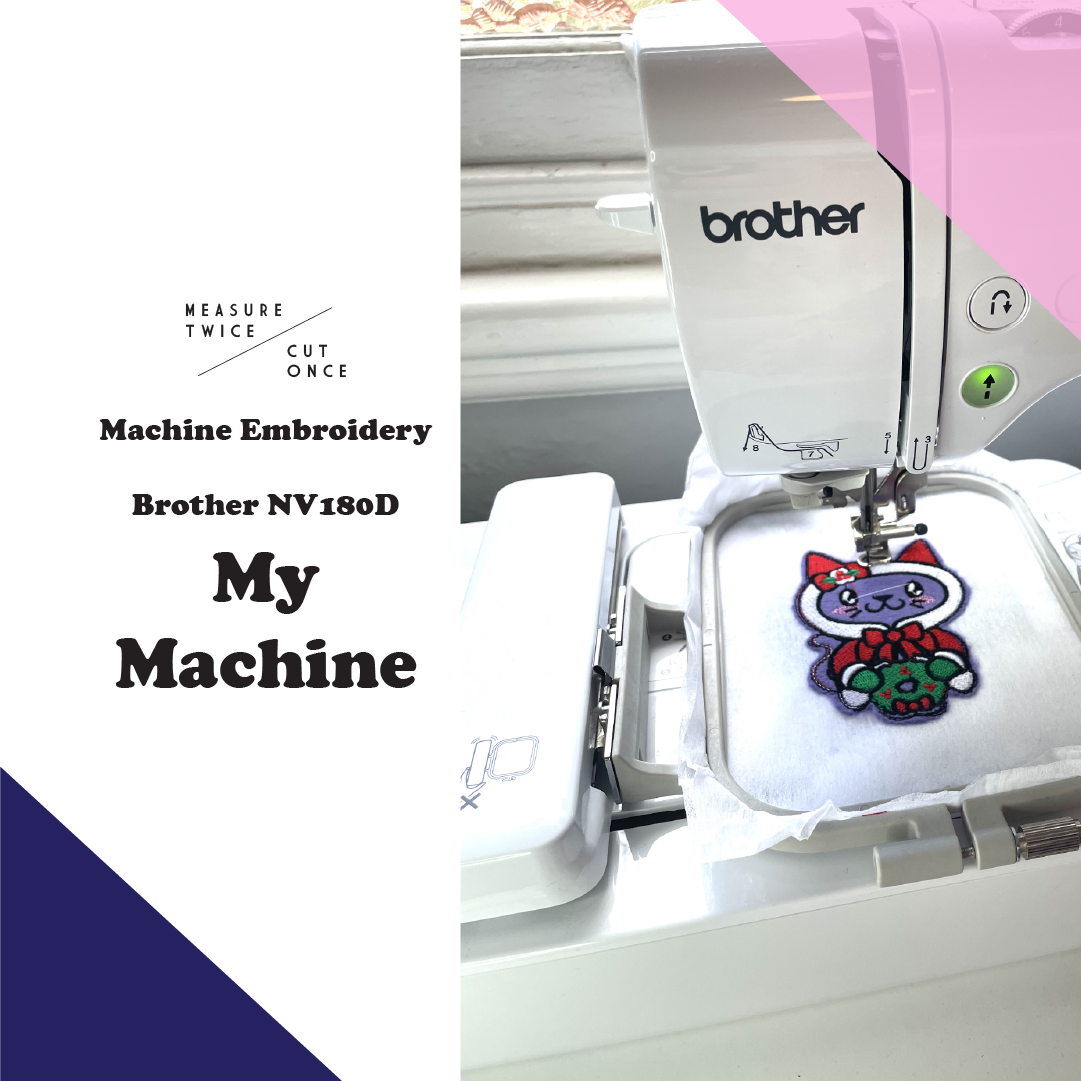
See My Brother NV180D sewing machine in Embroidery Machine Mode!

Today I’m showing my machine in its embroidery set up, you normally see it in regular sewing mode.it’s sure easy to swap between the 2 and i love having the fun experimental option of some embroidery. If you’ve got any questions, add them down below and don’t forget to subscribe!

My machine is a Brother NV180D available at Bobbin and Ink https://www.bobbinandink.com/products…

The pattern is available from Urban Threads https://www.urbanthreads.com/products…

Embroidery Thread is from Brother, available at Bobbin and Inkhttps://www.bobbinandink.com/products…

Wool Felt from My Felt Lady https://myfeltlady.com/

2022 is my year of taking the Scary out of Sewing! I want as many people as possible to take up sewing so they can create, make, mend and more. To help take away the scary, every Friday there is going to be a new video with accompanying pattern for a project entirely aimed at beginners. Each week there will be different techniques to learn or go over and it’s going to be a super fun way to grow your sewing skills.

See more of my sewing and shop patterns at https://www.measuretwicecutonce.com.au

Follow me on Instagram https://www.instagram.com/_measuretwi...

Follow me on Twitter https://twitter.com/_MeasureTwice​

Support me on Patreon https://www.patreon.com/MeasureTwiceC...

Posted on Leave a comment

Sewing Techniques: Lengthen or Shorten a swimsuit pattern

Swimwear especially one pieces really don’t give you much room to finalise the length once you are finished like you would for a dress or a skirt. So here are some tips and tricks to make getting it right for you.

Choosing your size

Swimwear needs to use the negative ease of the pattern/fabric combination in order to fit correctly. 

Measure yourself. Bust, waist and hip. If the style has a lower back then also measure your bust from side seam to side seam over the breasts.

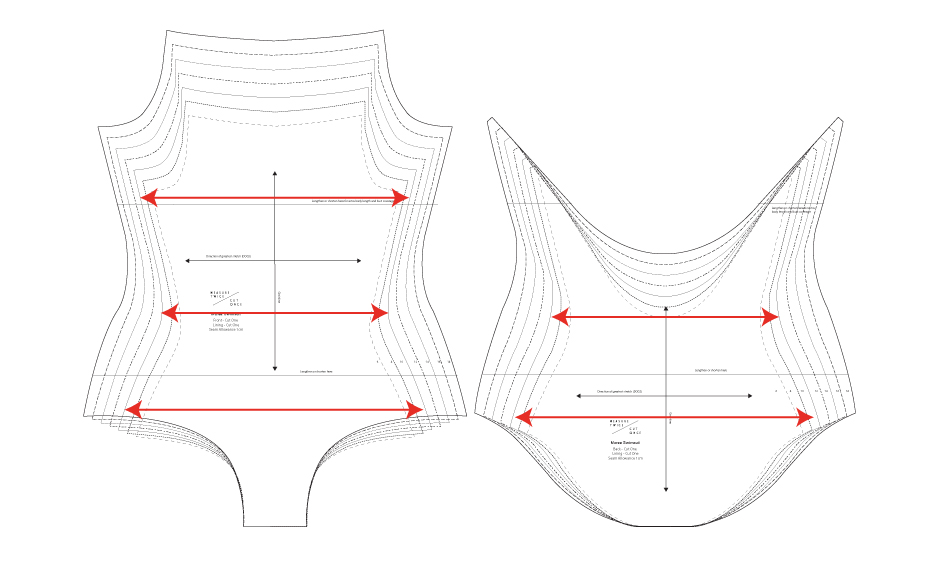
Measure your flat pattern pieces and subtract the seam allowance. Seam Allowance is 1cm (if you are not using a Measure Twice Cut Once pattern be sure to check the individual brands instructions for seam allowances). Add front and back measurements together to get the circumference. Check your stretch % and use that to calculate your size. If you aren’t confident doing that, then subtract 5cm from the total circumference and start with that size.

Lengthening or Shortening

Measure from your crotch to the neckline position of your chosen style. Stand straight, do not lean forward. Look in a full lenth mirror if it helps you see the correct positioning.

On the pattern piece front measure from crotch to neckline and subtract the seam allowances. 

Compare the 2 measurements and determine if you want to lengthen or shorten? You want a small amount of negative ease in this case but no more than 3cm unless your fabric has a very high stretch %.

Use the lengthen/shorten lines indicated on the pattern. Spread the amount you need to lengthen or shorten throughout the pattern in order to preserve proportions.

**Proportions are highly relevant in all pattern making but seeing as how swim is the smallest amount of fabric covering the most curved parts of your body it counts more than ever. Always spread or reduce evenly throughout the pattern taking into account your own body shape. If your bust needs significantly more length than your belly/bottom then add more there. The key is to maintain the desired look of the design while also taking into account your own body shaping.

Once the required amount is added or subtracted, re draw the side seams. Maintain a smooth and even seam line to ensure it fits the contours of your body.

Check other areas before proceeding

Measure side seams to ensure they still match as in front and back are same lengths or back meets to the correct point on the front in the case of swimwear with low backs.

Check that the new body length has not affected other areas of the swimsuit in terms of coverage. Key areas to check are centre front necklines, underarms and bottom coverage. Again measure your body and measure your pattern pieces to determine if any changes need to be made.

I hope this helps you determine your correct length for swimwear, if you have any questions drop them in the comments and I’ll answer them in case anyone else has the same query.

Posted on Leave a comment

Technical drawings of garments

techdrawings_header

Many of you have asked about the technical drawings included within the pdf patterns. Where did I get them, how are they done etc etc

They are all my drawings done using Adobe Illustrator.

I have a number of blocks I’ve developed over many years for swimwear, jeans, jackets, dresses or pretty much any style of clothing. I use these over and over to create all the various styles of technical drawings I need to produce. When necessary I just draw new ones to suit my needs.

techdrawings_1

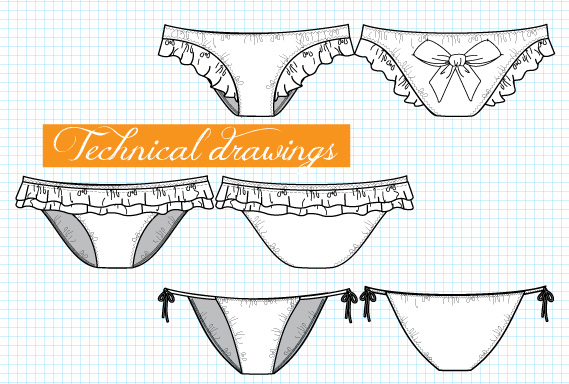
These are all drawn proportionally so they look like what the actual garment will look like. And they include all the correct stitch lines, types of stitching, dart placements etc. If it is on the final garment it will appear on the drawing.

Very occasionally I will be asked to do fashion drawings, which I will do using either hand drawing or a combination of hand and computer illustration. These drawings are not technical, they can have distorted proportions and instead of being an aid to construction are seen as a way to capture the feeling of a collection or individual garment.

While they are beautiful and often very fun to do, the standard within the industry is a flat technical drawing that is easy to interpret and shows the details of the garments.

Using Illustrator I draw using either my mouse or a pen and tablet combination. I like using the tablet with the pen as it feels more like natural drawing and helps me to get curves to run smoothly.

techdrawings_2

When drawing instructions I use the actual pattern pieces shrunk down so it looks just like what you are looking at when you are sewing. Sometimes I need to distort the drawing to make it look more like the fabric, especially when showing seams that have been joined. As this is when the garment goes from flat panels to taking on a dimension so the drawings need to relate that to you.

I hope that helps explain the drawings, if you have any more questions please do not hesitate to ask. Oh and I am available to hire should you need any drawings done?

Posted on 10 Comments

Tonight I run

I will preface this by saying, I am not a natural runner. In fact I wouldn’t even call myself a runner. I go forward as fast as I can and I don’t give up. That’s a better description of what I do.

For months now I haven’t even done that. Since early December I have been battling Whooping cough. Of course I didn’t know that’s what it was until almost the end of March. It had been thought I just had a really bad cold, the kind of cold where you cough so much that at least three times a day you are gasping for air, unable to breathe because you can’t stop coughing. Where you can barely sleep as your body is so starved of oxygen that you are jolted awake to continue coughing in an effort to get even a little bit into your lungs. Suffice to say it has not been fun.

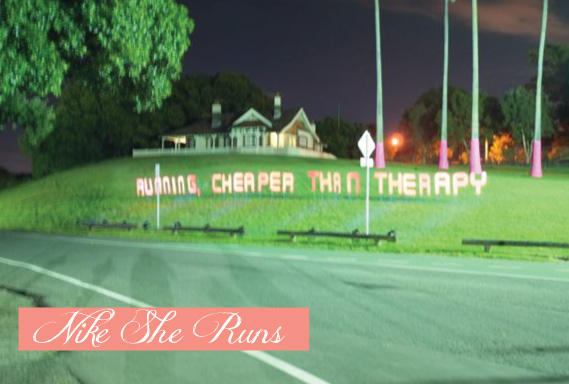
But tonight is the Nike She Runs the Night 10km*. In fact as you read this I’ll be running (or possibly walking). Now in its third year it is my favourite motivational tool. I work all year to get to this race and then use the memory of just how fun it is to push me harder for the remainder of the year.

DSCF0356.JPG

Last year I worked hard and beat my goal time. I had a goal for this year. In November I logged 85km of running and was on track to do 100km in December and the plan had been by January to start working on my speed, drop some weight and smash a new goal.

Instead since December I have barely done anything, walking down the street tires me out, I struggle to walk up an incline as I can’t breathe and I’ve gained weight. Not ideal circumstances.

For the past 2 weeks I’ve been feeling slightly better. I cough less and I’m sleeping more solidly. So I have been doing some small runs. Three km where I run a little, walk, run, walk and struggle to make it to the end. I even managed a four km version. This is my usual training view, which helps when your struggling along.

IMG_4249

Last Saturday I headed out to attempt the race route. The Englishman ran with me, even though he could easily cover the distance in less than half my time. Using my run, walk method I made the full 10km, which was a surprise and a delight. I spent the next few days in pain, but in a good I’ve used my body type of way.

Even though it’s all been a struggle and I’m massively under prepared and going to be nowhere near my goal time I’m looking forward to it.

DSCF3735.JPG

One the reasons I don’t give up with attempting to run is the mental workout. Once I push through my brain telling me to stop, when I’m not mentally swearing at myself to get the lead out and just go! I’m thinking up new designs, solving construction methods and making plans. That combined with a crazy sound track gets me through.

DSCF0352.JPG

So wherever you are on this Saturday night, have a little bit of a cheer for me and the 6000 women I will be running with tonight.

*This is not a sponsored post, it’s just my favourite event

Posted on Leave a comment

Garment Factories in China

I’ve been lucky that traveling has been a perk of many of my jobs. Sometimes the travel is not glamorous and you are not always going to high tourist destinations but a chance to see how other people live and work is always fascinating.

china factories layout

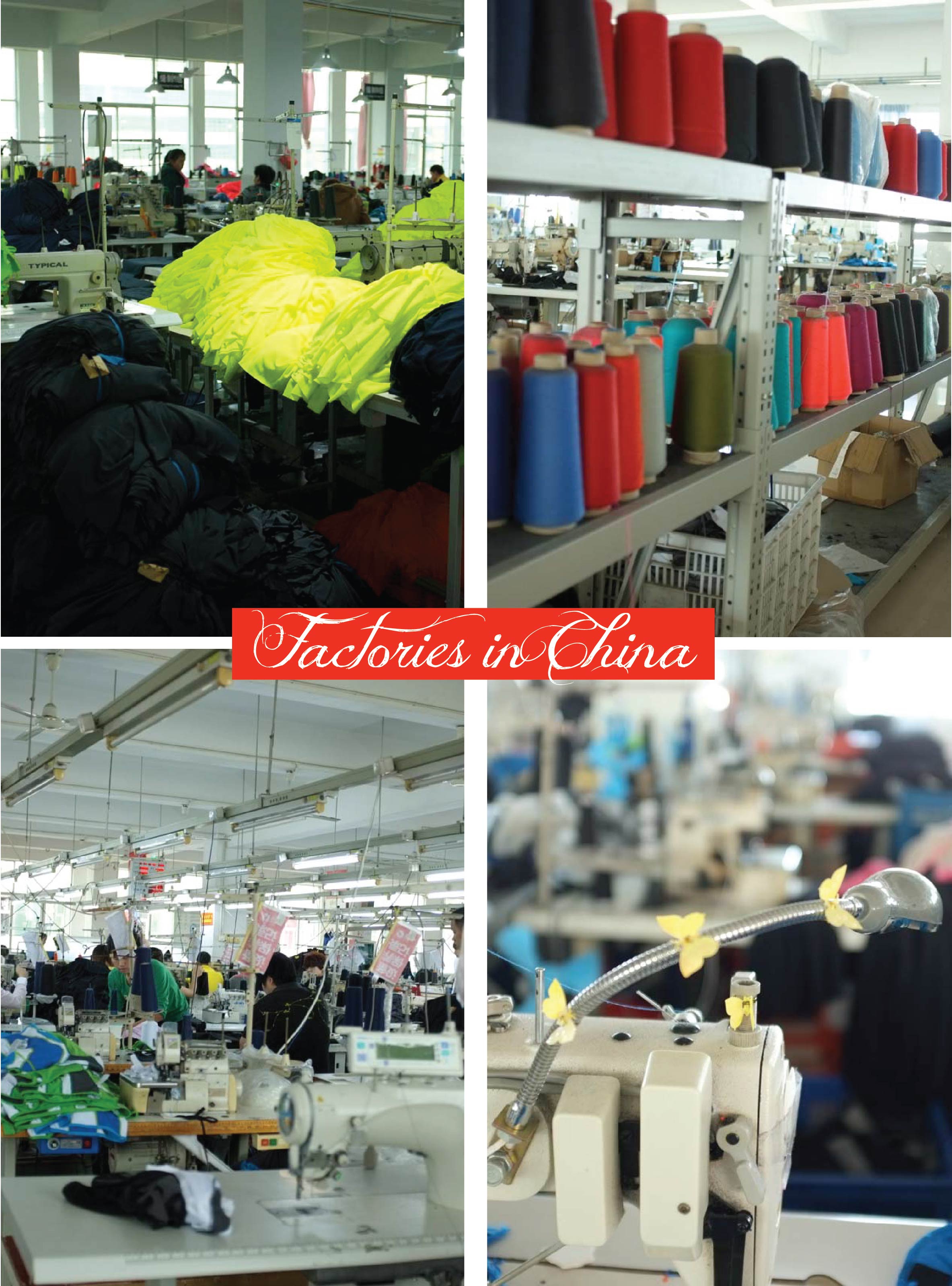
One of the places I work with gets their production done in China. The factories are huge, fairly modern and the staff are treated well. When I get to go on the production floor it never ceases to amaze me just how highly skilled they are.

They fly through garments in moments with each machinist doing a small portion of the garment, sometimes it’s a large seam, sometimes it’s nothing more than sewing on one single trim.

Big counter boards are at the end of each production line with the amount finished that day and the target to get to. At first I was astonished by how huge the numbers were but as I came to realise just how good the machinists were the numbers made sense. I like when the machinists have decorated their machines it always seems like something I would do!

It’s huge and fascinating and a part of my job as a designer that I’m grateful to be able to see.